

Search Engine Optimization, Technology, Web Development
How to Rank in Google AI Overviews: Best Practices
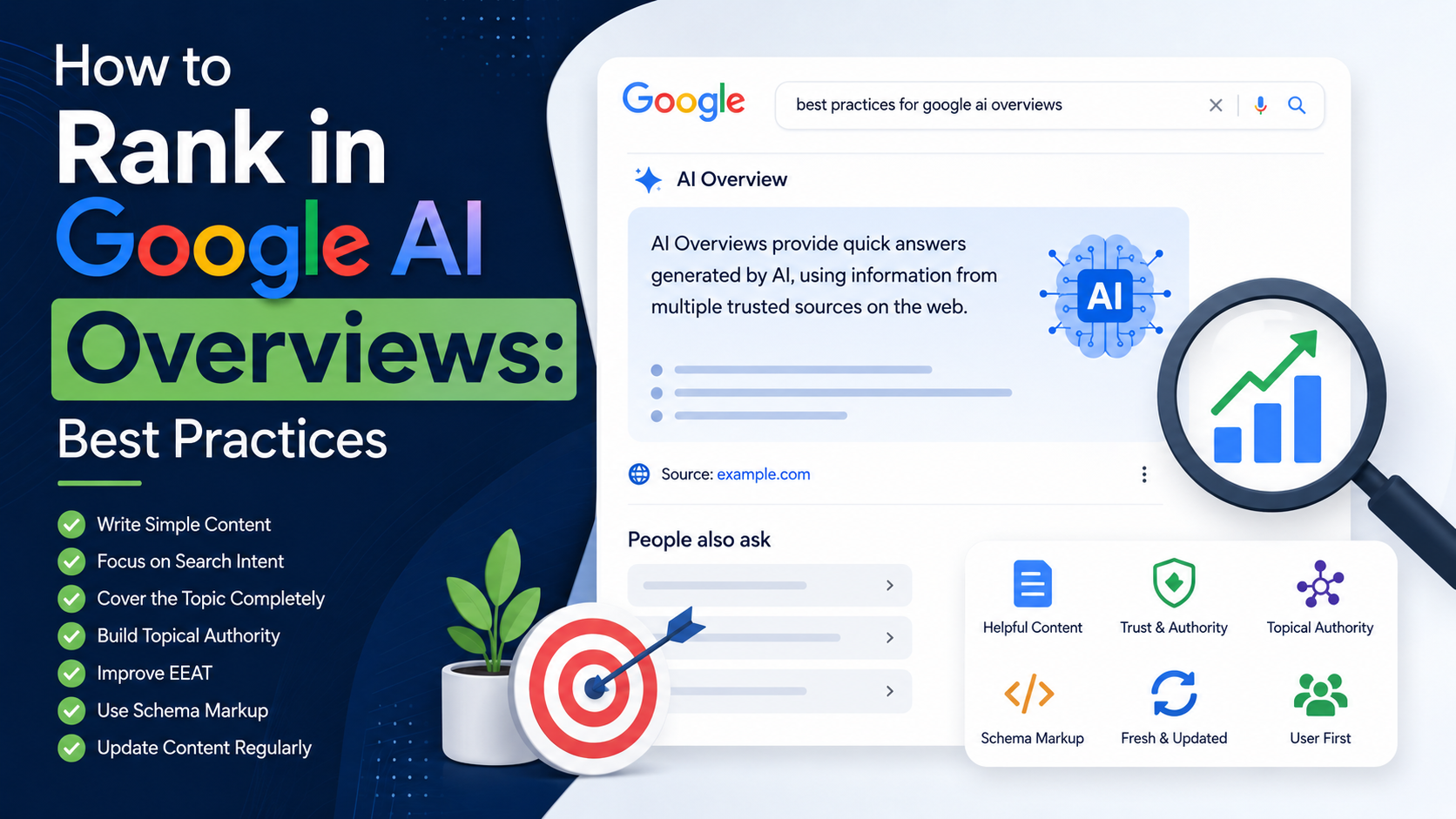
Google AI Overviews are AI-generated summaries that Google now shows against informational queries in search results. The aim of this is to give users answers to their queries right at the top. They do not have to open blue links that appear in search results.
Unlike Featured Snippets, which usually come from one page. AI Overviews include information from multiple websites. That is where many web admins are now in the heated debate of how to get their website ranked in Google AI Overviews.
Why Ranking in AI Overviews Matters?
Many search queries are now directly answered by AI overviews. Many users get their answer and leave without opening any website. Ranking in AI Overviews is very important.
Appearing in AI Overviews offers several benefits.
- Increases your brand visibility.
- Builds trust and authority.
- Brings highly targeted visitors.
- Helps users discover your website.
- Prepares your SEO strategy for the future.
Although AI Overviews answer many questions directly, they still link to trusted sources. That gives quality websites another opportunity to earn traffic.
Best Practices to Rank in Google AI Overviews
Ranking in Google AI Overviews mainly depends on topical coverage, content simplicity, and website authority. Here are some tested practices recommended by experts that can help your website appear in AI Overviews.
Write simple content
The very first thing you should focus on is making your content simple to read and understand. Unless your content is easy for readers to understand, it is not going to rank.
Avoid unnecessarily complex language unless your audience needs technical details. Clear, easy-to-read content is generally more accessible to readers. A good approach is to humanize your content where appropriate while preserving accuracy and clarity.
Simple writing helps both readers and search engines. To make your writing simple, use:
- Short paragraphs
- Clear headings
- Bullet points
- Everyday words
- Active voice
Focus on search intent
After content simplicity, next comes search intent. It basically means what users want from the content. Before you start writing, understand what people want to know about the topic you are writing about.
Pro Tip: Always answer the main question first, like a summary.
Place a short answer near the beginning of every important section. Try to answer the question in about 40 to 70 words before adding more details. This makes it easier for both readers and AI systems to understand your content.
Cover the topic completely
How well you cover a topic also impacts the content performance and rankings. Do not stop after answering one question. Try to cover every relevant aspect of the topic that users may also want to know.
Build topical authority
Topical authority is different from topical coverage. Topical coverage is related to a particular web page, while authority is of the whole website.
Google trusts websites that consistently publish high-quality content on one subject. So, instead of writing one article on a topic, create multiple articles around it that cover different aspects, and link them internally well. This will create a topical cluster on your website and help improve rankings.
Improve EEAT
Strong E-E-A-T helps Google trust your website. Improve it by adding:
- Author biography
- Contact information
- Editorial guidelines
- Reliable references
- Updated publication dates
Trust is becoming more important as AI-generated content continues to grow.
Use Schema Markup
Structured data helps Google understand your page. Useful schema types include:
- Article schema
- How-to schema
Schema does not guarantee AI Overview rankings, but it improves content understanding.
Optimize images
Images also support your SEO. Always use:
- Descriptive file names
- Clear alt text
- Original images, whenever possible
- Compressed image sizes for faster loading
Update content regularly
Google prefers fresh information. Review important articles every few months.
Update:
- Statistics
- Screenshots
- Examples
- New AI features
- Industry changes
Regular updates keep your content relevant.
Common Mistakes to Avoid
Many websites fail to appear in AI Overviews because they make avoidable mistakes. Some common ones include:
- Keyword stuffing
- Thin or incomplete content
- Ignoring search intent
- Ignoring AI detection
- Publishing outdated information
- Weak internal linking
- Missing author information
- Publishing AI-generated content without human editing
Always review your content and check for plagiarism and AI detection. Before publishing, review AI-generated content carefully and, where appropriate, humanize AI content to improve clarity, accuracy, and readability.
Final Thoughts
Ranking in Google AI Overviews takes time and consistent effort. The best practices shared above can help improve your chances of getting featured. Focus on creating content that helps readers first, and keep improving your website over time.
Comments
Comments are available to signed-in users and are moderated to keep the discussion useful and respectful. Spam, automated submissions, and low-value promotional comments are removed. Outbound links may be approved when they are relevant and genuinely helpful to readers, but they are displayed as plain text rather than clickable hyperlinks.
No comments have been published yet.
Please sign in to submit a comment.