

Email, Cybersecurity, Security
How Phishing Bypasses Your Firewall, and What Actually Stops It
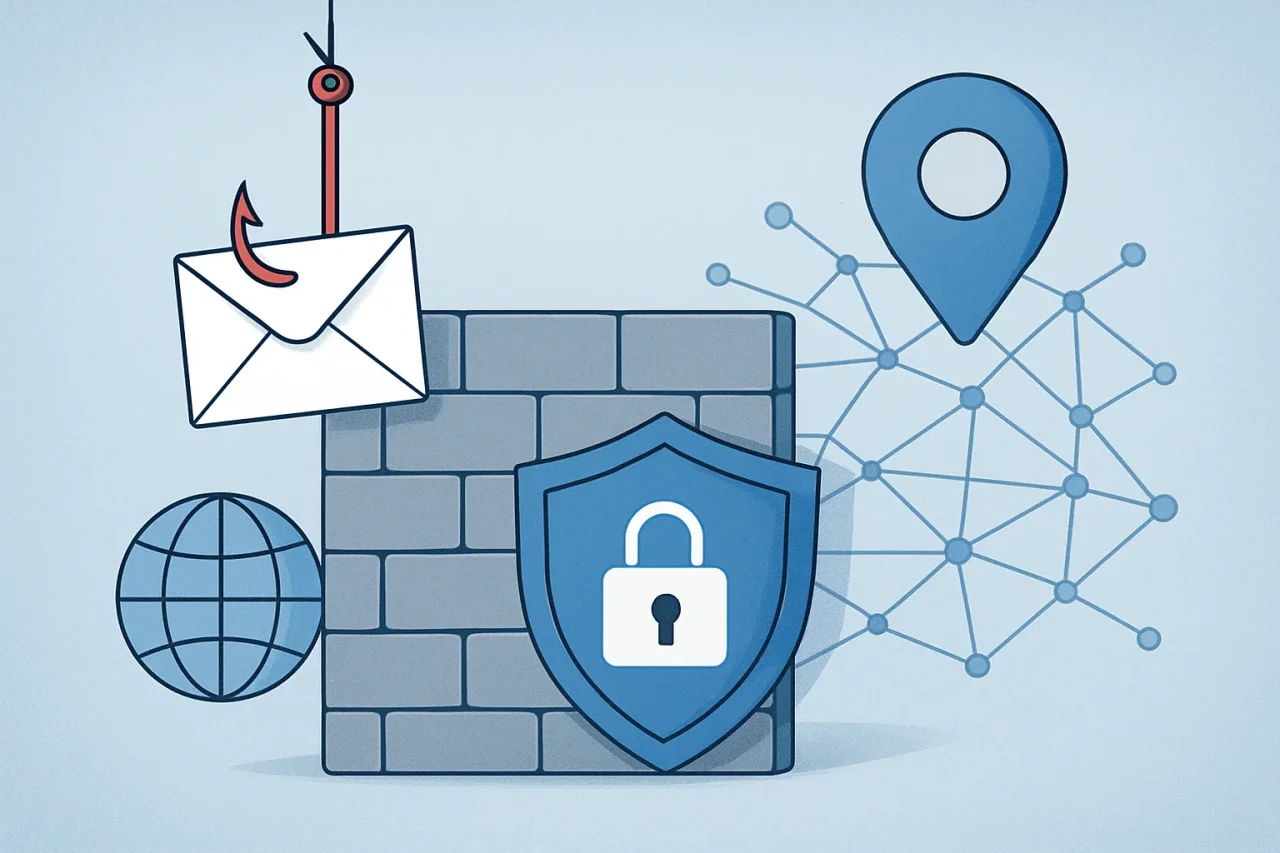
Understanding the Limits of Firewalls Against Phishing Attacks
In today’s cybersecurity landscape, firewalls have long been considered a first line of defense for organizations. They monitor and control incoming and outgoing network traffic based on predetermined security rules, effectively blocking unauthorized access. However, as cyber threats evolve, phishing attacks have become increasingly sophisticated, often bypassing traditional firewall protections. Understanding why this happens is crucial for businesses aiming to strengthen their defenses.
Phishing attacks typically exploit human vulnerabilities rather than purely technical ones. They use deceptive emails, messages, or websites to trick recipients into revealing sensitive information or downloading malicious software. Since these attacks often come through legitimate communication channels, firewalls, which focus primarily on network traffic filtering, may not recognize the threat.
Phishing emails frequently use social engineering tactics to appear trustworthy and may even originate from compromised but otherwise legitimate email accounts. As a result, firewalls may allow these emails to pass through without raising any flags. According to a report by Verizon, 82% of breaches involved a human element, with phishing being the most common initial attack vector.
Adding to the challenge, phishing campaigns have become more targeted and personalized, often referred to as spear-phishing. These attacks tailor messages to specific individuals or organizations, increasing the likelihood of success. Because firewalls focus on blocking known malicious domains or IP addresses, they often fail to detect these highly customized threats that use legitimate or newly created domains. This evolution in tactics means that relying solely on firewalls leaves a significant security gap.
Why Firewalls Alone Are Not Enough
Firewalls are excellent at defending against certain types of attacks, such as blocking unauthorized IP addresses or preventing access to known malicious websites. However, phishing attacks often leverage trusted domains and cleverly disguised links that firewalls cannot distinguish from safe traffic. This means that malicious payloads embedded in emails or links can slip through unnoticed.
Another limitation is that firewalls do not typically scan the content of emails or analyze attachments for malware in-depth. This gap allows attackers to send weaponized documents that, once opened by an unsuspecting user, can install ransomware or steal credentials. Statistics from the Anti-Phishing Working Group (APWG) show that phishing attacks increased by 65% between 2020 and 2023, highlighting the growing challenge for perimeter-based defenses like firewalls.
Additionally, many phishing attacks exploit zero-day vulnerabilities or use encrypted communication channels, making it harder for firewalls to inspect traffic effectively. Encryption, while essential for privacy, can also shield malicious content from traditional firewall inspection tools unless paired with advanced decryption capabilities, which many organizations lack due to complexity or privacy concerns.
Firewalls generally do not analyze user behavior or contextual data, which are critical for identifying phishing attempts that rely on social engineering. For example, an email that appears to come from a trusted source but asks for unusual actions may evade firewall detection but can be caught by behavioral analytics systems.
In summary, while firewalls are indispensable for network security, their capabilities are limited when it comes to detecting and preventing phishing attacks. This reality necessitates the adoption of additional, specialized measures designed specifically to address phishing threats.
Enhancing Protection with Specialized Security Solutions
Protecting against phishing attacks typically involves a layered security strategy that combines email filtering, threat intelligence, user awareness training, and incident response planning. For example, technology services by Thriveon represent one approach to managed IT services that can incorporate these capabilities as part of a broader cybersecurity program.
A critical component of phishing prevention is the use of email security solutions that analyze email content, sender reputation, and embedded URLs to identify suspicious messages. For example, Perimetra's email security approach illustrates one implementation of email security technologies designed to help detect and filter phishing attempts before they reach users' inboxes.
Artificial intelligence (AI) and machine learning are increasingly used in email security technologies to analyze large volumes of email data, identify phishing patterns, and adapt to emerging attack techniques. These technologies can analyze vast amounts of email data, identify patterns indicative of phishing, and adapt to new tactics faster than traditional signature-based detection methods. For example, AI can detect subtle anomalies in email headers or message content that might indicate spoofing or impersonation attempts.
Integrating threat intelligence feeds into email security platforms enhances their effectiveness by providing up-to-date information on emerging phishing campaigns and malicious domains. This dynamic approach contrasts with the static rule sets typically employed by firewalls.
According to a study by IBM Security, organizations with advanced email security measures reduce the risk of phishing breaches by up to 70% compared to those relying solely on traditional perimeter defenses.
Why User Education Complements Technical Defenses
Even the most sophisticated technology cannot fully prevent phishing if users are unprepared to recognize and respond to suspicious messages. Phishing relies heavily on social engineering, making human awareness a vital defense layer. Regular training programs that simulate phishing attacks and teach employees how to identify red flags significantly reduce the likelihood of successful breaches.
Studies show that organizations investing in phishing awareness training experience a 50% reduction in click rates on malicious links. This underscores the importance of combining technology services with a strong culture of cybersecurity awareness.
User education should go beyond one-time training sessions. Effective programs include ongoing awareness campaigns, periodic phishing simulations, and clear reporting mechanisms so employees feel empowered to report suspicious emails without fear of reprisal. Fostering a security-conscious culture encourages vigilance and helps reduce the risk of insider threats.
In addition, organizations should tailor training to different roles and departments since the likelihood and impact of phishing attacks can vary. For example, finance and HR teams might be targeted with specific scams related to invoices or employee data, requiring customized training content.
Combining user education with technical solutions creates a comprehensive defense that addresses both the technological and human elements of phishing attacks.
Implementing a Comprehensive Anti-Phishing Strategy
A successful anti-phishing strategy integrates multiple elements:
- Advanced Email Security: Deploy specialized solutions that filter emails, analyze content, and block malicious attachments and URLs.
- Managed IT Support: Organizations may use internal IT teams, managed service providers, or a combination of both to support continuous monitoring, incident response, and ongoing security updates.
- User Awareness Training: Regularly educate employees on phishing tactics and conduct simulated attacks to reinforce learning.
- Multi-Factor Authentication (MFA): Require MFA for access to sensitive systems to reduce the impact of compromised credentials.
- Behavioral Analytics: Utilize tools that monitor user behavior and detect anomalies indicative of phishing or compromised accounts.
- Incident Response Planning: Establish clear protocols for responding to phishing incidents to minimize damage and recover quickly.
Firewalls are an essential foundation but not a silver bullet. By incorporating technologies and fostering informed user behavior, organizations can build a resilient defense against phishing.
It is also important to regularly review and update security policies and technologies to adapt to the evolving threat landscape. Cybercriminals continuously refine their tactics, and defenses must keep pace to remain effective.
Conclusion
Phishing attacks continue to exploit human behavior and trusted communication channels, making them difficult for traditional firewalls to detect on their own. While firewalls remain an important part of network security, reducing phishing risk typically requires additional controls such as email security technologies, user awareness training, identity verification, and incident response planning.
As phishing techniques continue to evolve, organizations can strengthen their defenses by regularly reviewing security controls, monitoring emerging threats, and updating employee awareness programs. A layered cybersecurity strategy helps reduce the likelihood and impact of phishing attacks while supporting broader information security objectives.
Comments
Comments are available to signed-in users and are moderated to keep the discussion useful and respectful. Spam, automated submissions, and low-value promotional comments are removed. Outbound links may be approved when they are relevant and genuinely helpful to readers, but they are displayed as plain text rather than clickable hyperlinks.
No comments have been published yet.
Please sign in to submit a comment.