

How Hyper-Specialized E-Commerce Businesses Succeed in the Replacement Parts Market
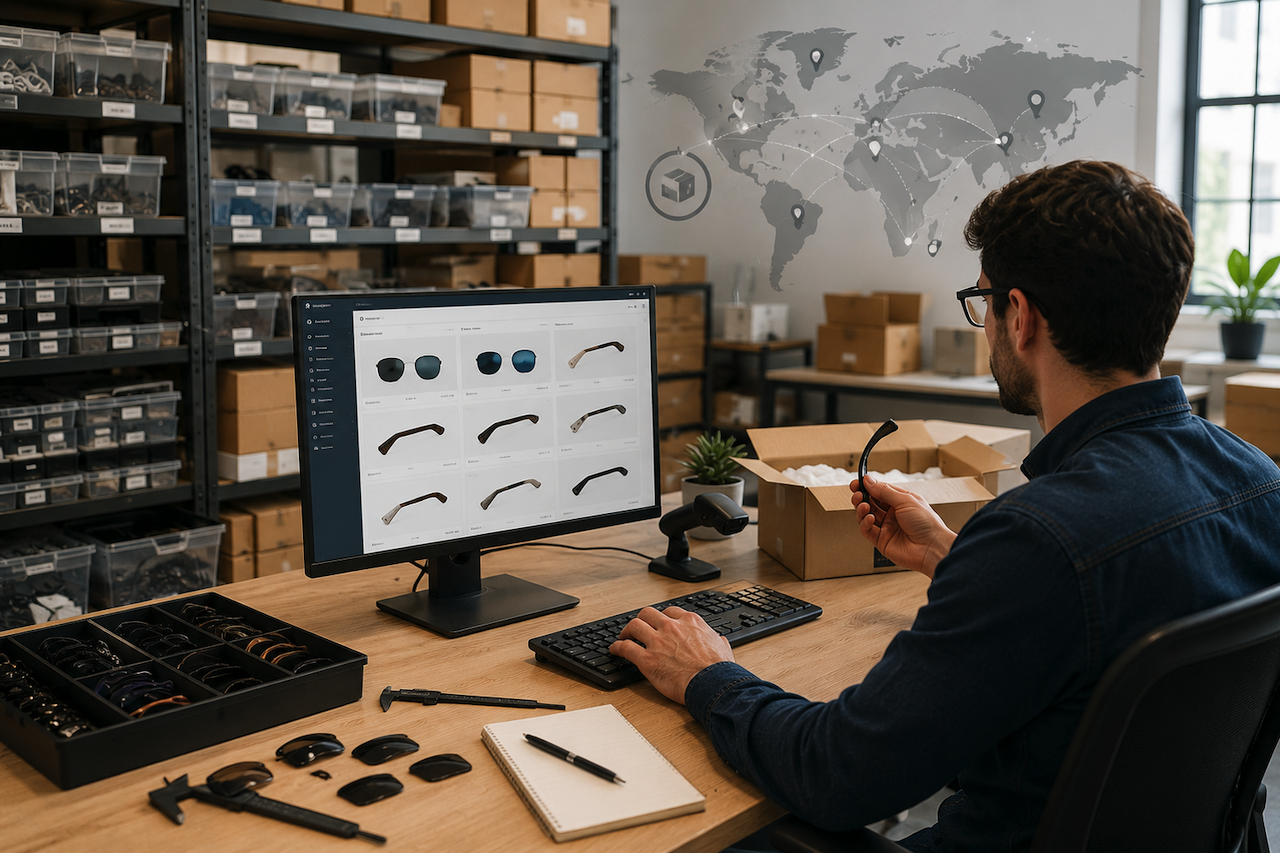
In recent years, a growing number of small businesses have found success by focusing on highly specialized product categories rather than competing directly with large online marketplaces. One example is the replacement eyewear parts market, where customers often struggle to find compatible lenses, arms, and components for damaged or discontinued products.
The replacement-parts market existed long before e-commerce became mainstream, but it was often fragmented and difficult for consumers to navigate. Customers needing replacement components frequently faced limited availability, uncertain compatibility, or products of questionable quality. Businesses such as ReplacementLenses.net operate in this niche by focusing on replacement eyewear parts and related services.
Rather than trying to serve every category of consumer goods, many successful businesses have adopted a different strategy: focusing deeply on a narrow niche where product expertise matters. This approach allows them to build specialized knowledge, maintain detailed product catalogs, and provide support that larger general retailers may struggle to match.
Finding Opportunity in an Underserved Market
Many replacement-parts categories share similar challenges. Customers often need exact matches, technical specifications, or compatibility guidance before making a purchase. Unlike standard retail products, replacement components frequently require detailed product knowledge and inventory management.
Businesses operating in these niches often focus on carrying a broad range of replacement parts, including current products, discontinued models, compatible alternatives, and custom solutions. This depth of inventory can become a competitive advantage when customers are searching for difficult-to-find items.
Turning Technical Expertise into an Online Business
One factor that distinguishes successful niche retailers is the ability to combine technical expertise with e-commerce infrastructure. In product categories where specifications, fit, and quality matter, knowledgeable staff can help reduce errors, improve customer satisfaction, and build trust.
For example, replacement eyewear lenses require attention to materials, dimensions, optical characteristics, and compatibility requirements. Similar challenges exist in many replacement-parts industries, where customers rely on accurate product information and quality control before making a purchase. Some specialized retailers employ a team of qualified opticians or technical professionals to help verify product specifications, support customers, and maintain quality-control standards.
The Challenge of Serving Multiple Markets
Expanding internationally involves more than translating product descriptions. Different markets often use different terminology, payment methods, customer service expectations, and search behavior.
Successful e-commerce businesses typically localize content, customer support, and payment options to better serve customers in different regions. This localization can improve both customer experience and search visibility.
Managing a Long-Tail Product Catalog
Many niche retailers succeed by carrying products that larger competitors overlook. While high-volume items attract attention, long-tail inventory often generates a significant portion of sales because customers have fewer alternatives.
Being able to provide hard-to-find replacement parts, discontinued items, or specialized components can create customer loyalty and reduce direct competition.
Quality Control and Consumer Trust
Product quality remains a significant challenge in many replacement-parts markets. Counterfeit products, compatibility issues, and inaccurate specifications can create frustration for consumers and damage trust.
Businesses that invest in quality-control processes, supplier verification, and product testing often differentiate themselves from generic marketplace sellers. In specialized industries, trust and expertise can be as important as price.
What This Reveals About E-Commerce Specialization
The growth of many niche online retailers highlights a broader trend in e-commerce: specialization can be more effective than scale. Rather than competing on product volume, successful businesses often compete through expertise, inventory depth, customer support, and a clear understanding of a specific market.
For entrepreneurs and e-commerce operators, the lesson is straightforward: finding an underserved niche and developing genuine expertise can create opportunities that are difficult for larger competitors to replicate.
Featured Image generated by ChatGPT.
Related Articles

September 19, 2025
Data Scraping Applications in Today’s Competitive E-Commerce Market
Data has become the new currency of today’s digital economy. Across industries, businesses rely on structured information to make better decisions, anticipate consumer demand, and...
Read More
August 12, 2025
SEO for Shopify Stores: How Small E-Commerce Brands Can Compete Online
While the world of online sales is a noisy place to compete as a small e-commerce brand, it can also feel like shouting into a black hole. You've created a great product, designed...
Read More
August 6, 2024
5 Unique Ways to Improve Packaging For E-Commerce Businesses Using IP Location
Struggling with inaccurate delivery times and inefficient logistics? The business environment is always on the lookout for more precision-based decisions. This is especially true f...
Read More
Comments
Comments are available to signed-in users and are moderated to keep the discussion useful and respectful. Spam, automated submissions, and low-value promotional comments are removed. Outbound links may be approved when they are relevant and genuinely helpful to readers, but they are displayed as plain text rather than clickable hyperlinks.
No comments have been published yet.
Please sign in to submit a comment.