

AI in Education: Helping Students Learn Faster and Smarter
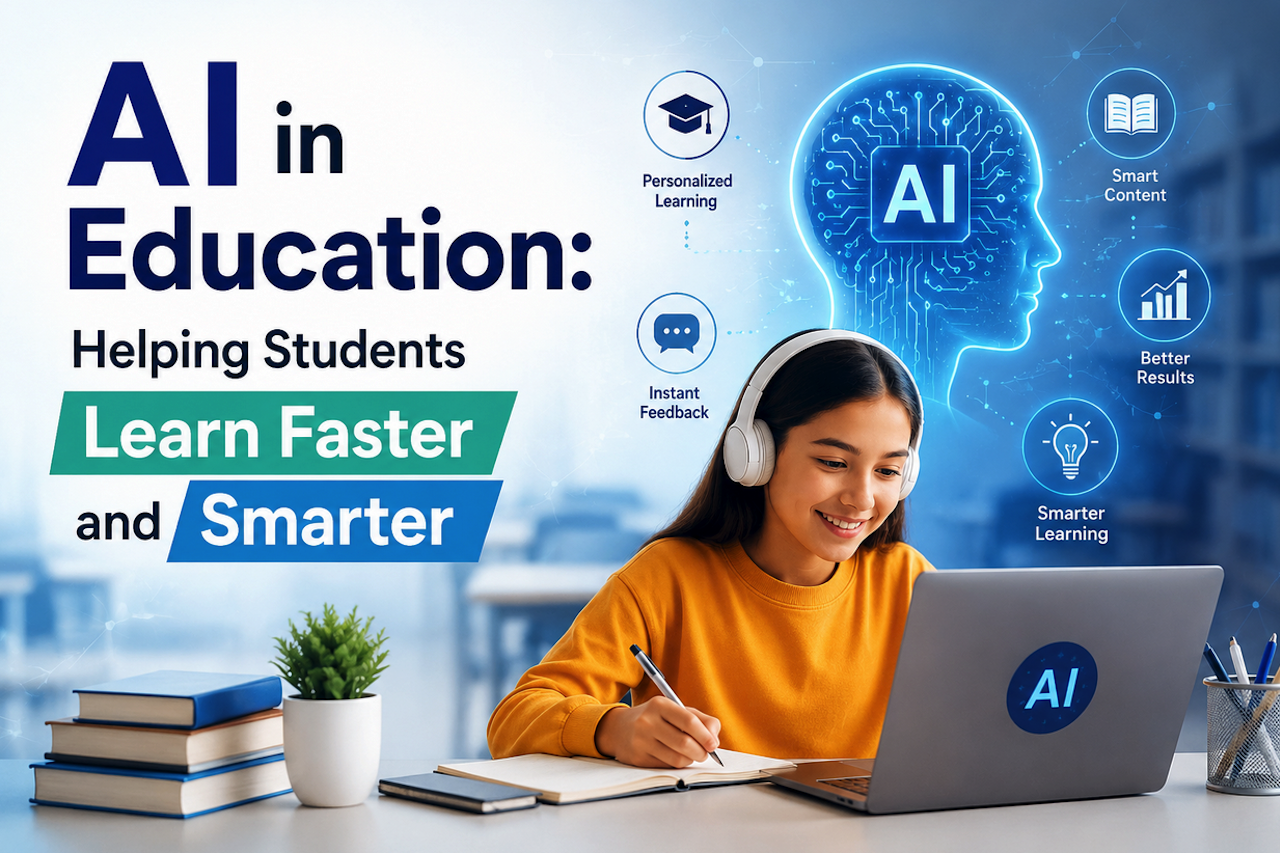
Education has changed dramatically over the past few decades. From traditional classrooms with chalkboards to digital learning platforms accessible from anywhere, technology continues to reshape how students learn. One of the most significant developments in recent years is Artificial Intelligence (AI). Today, AI is helping students learn faster, understand concepts more clearly, and receive personalized support that was once impossible at scale.
Rather than replacing teachers, AI is becoming a powerful tool that supports both students and educators. It can identify learning gaps, provide instant feedback, and create customized learning experiences based on individual needs. As AI technology continues to improve, its role in education is becoming increasingly important.
What Is AI in Education?
Artificial Intelligence in education refers to the use of intelligent software and systems that can analyze data, recognize patterns, and assist with learning tasks. These systems can adapt to students' progress, recommend learning materials, answer questions, and even help solve academic problems.
Unlike traditional educational tools that provide the same content to everyone, AI-powered systems can personalize learning based on a student's strengths, weaknesses, pace, and learning style.
Personalized Learning for Every Student
One of the biggest challenges in education is that every student learns differently. Some students grasp concepts quickly, while others need more practice and explanation. In a classroom with many students, it can be difficult for teachers to provide individualized attention to everyone.
AI helps solve this problem through personalized learning. Modern learning platforms can track student performance and adjust lessons accordingly. If a student struggles with a particular topic, the system can provide additional explanations, exercises, and examples. If a student quickly masters a concept, the platform can introduce more advanced material.
This personalized approach helps students stay engaged and learn more effectively.
Instant Feedback Improves Learning
Traditionally, students often had to wait for teachers to grade assignments and provide feedback. With AI-powered educational tools, feedback can be delivered instantly.
Whether students are solving math problems, answering quizzes, or practicing writing skills, AI systems can identify mistakes immediately and explain how to correct them. This quick feedback helps students learn from errors while the information is still fresh in their minds.
Research has consistently shown that immediate feedback can significantly improve learning outcomes and retention.
AI Makes Learning More Accessible
Education should be accessible to everyone, regardless of location, language, or learning challenges. AI is helping bridge educational gaps around the world.
Language translation tools can help students learn content in different languages. Speech recognition technology assists students with disabilities. Text-to-speech and speech-to-text systems support learners who may struggle with reading or writing.
Students in remote areas can also benefit from AI-powered educational resources that provide high-quality learning support even when access to teachers or tutors is limited.
Supporting Mathematics Education
Mathematics is a subject that many students find challenging. Complex formulas, multi-step calculations, and abstract concepts can often create frustration.
This is where tools such as an AI math solver can be helpful. These systems can guide students through problem-solving processes, explain each step, and help learners understand the logic behind a solution rather than simply providing an answer.
Many students also use online math solvers to practice homework problems, verify their work, and gain confidence in topics they find difficult. When used responsibly, these tools can serve as valuable learning companions that encourage deeper understanding.
Modern AI-powered math platforms are becoming increasingly sophisticated, offering explanations, visualizations, and alternative solving methods that can help students approach problems from different perspectives.
Helping Teachers Focus on Teaching
AI is not only benefiting students but also helping teachers manage their workloads more effectively.
Educators spend a significant amount of time on administrative tasks such as grading assignments, preparing reports, and tracking student progress. AI-powered systems can automate many of these responsibilities, allowing teachers to focus more on instruction and student interaction.
By reducing repetitive tasks, teachers can dedicate more time to lesson planning, classroom discussions, and supporting students who need additional help.
Intelligent Tutoring Systems
AI-powered tutoring systems are becoming increasingly popular in schools and online learning environments. These virtual tutors can provide explanations, answer questions, and offer practice exercises at any time of day.
Unlike traditional tutors, who are limited by schedules and availability, AI tutors can provide support whenever students need assistance. This flexibility allows learners to study at their own pace and seek help whenever they encounter difficulties.
While AI tutors cannot replace human educators, they can supplement classroom learning and provide additional support outside school hours.
Encouraging Independent Learning
One of the most valuable benefits of AI in education is its ability to encourage self-directed learning.
Students no longer need to rely entirely on textbooks or classroom instruction. AI-powered tools can recommend resources, generate practice questions, and provide explanations based on individual learning needs.
This encourages students to take greater ownership of their education. They can explore topics independently, review challenging concepts, and learn at a pace that suits them.
Developing these independent learning skills can be beneficial not only during school years but throughout life.
Challenges and Considerations
Despite its many advantages, AI in education also presents certain challenges.
One concern is the possibility of students becoming overly dependent on technology. Educational tools should support learning rather than replace critical thinking and problem-solving skills.
Privacy is another important issue. Educational platforms often collect large amounts of student data, making data security and responsible usage essential.
Additionally, not all students have equal access to technology and internet connectivity. Ensuring that AI-powered education remains inclusive and accessible is an ongoing challenge for schools and policymakers.
The Future of AI in Education
The future of AI in education looks promising. As technology continues to evolve, educational systems will likely become even more personalized, interactive, and effective.
Future AI tools may provide real-time learning assistance, advanced simulations, immersive educational experiences, and highly adaptive learning pathways tailored to each student's goals and abilities.
Rather than replacing teachers, AI will likely continue serving as a powerful partner that enhances the learning experience for students and educators alike.
Conclusion
Artificial intelligence is transforming education by making learning more personalized, accessible, and efficient. From instant feedback and intelligent tutoring systems to adaptive learning platforms and personalized study support, AI is helping students overcome challenges and achieve better learning outcomes.
As educational technology continues to improve, students will have more opportunities to learn at their own pace, strengthen their understanding, and develop the skills needed for the future. Whether through personalized lessons, AI-powered learning tools, or intelligent educational platforms, AI is playing an increasingly important role in helping students learn faster and smarter.
Comments
Comments are available to signed-in users and are moderated to keep the discussion useful and respectful. Spam, automated submissions, and low-value promotional comments are removed. Outbound links may be approved when they are relevant and genuinely helpful to readers, but they are displayed as plain text rather than clickable hyperlinks.
No comments have been published yet.
Please sign in to submit a comment.